Table of Contents
When it comes to designing or renovating a kitchen, bathroom, or any space that requires storage, the choice of cabinetry is often the most significant decision. The right cabinet style can completely transform a room, offering not just functionality but also an essential aesthetic that reflects the latest trends of 2026. However, with so many cabinet styles to choose from, selecting the perfect one for your space can be overwhelming.
Whether you're a homeowner embarking on a renovation or a contractor guiding your clients through the design process in 2026, understanding the different cabinet styles is crucial. In this blog, we'll break down the most popular cabinet styles, the factors that influence your decision — and crucially, what Delaware County homeowners are actually choosing in 2024–2025 and why. We'll also include real cost benchmarks and first-hand installation insights from our team.
This guide covers both halves of the decision. Sections 1–6 deal with cabinet style — Shaker, raised panel, flat-panel, inset and distressed — and sections 7–13 deal with the cabinet features that determine how the cabinetry actually works day to day: sliding and pull-out drawers, open cabinets and open shelving, adjustable shelves, soft-close hardware, under-cabinet lighting and floor-to-ceiling custom storage, each with Delaware County cost ranges. ProBrothers is a licensed and insured Pennsylvania general contractor (PA HIC# 195591), and every figure below comes from our own project pricing in the Philadelphia metro market rather than a national average.
Understanding Cabinet Styles: What You Need to Know
Before you dive into choosing a cabinet style according to 2026 trends, it's essential to understand what different styles entail. Cabinet designs can vary widely in terms of their door style, finish, and construction. Broadly speaking, cabinets fall into one of several categories, with each offering distinct aesthetics and functionality suited to 2026 home preferences.
Shaker Style Cabinets
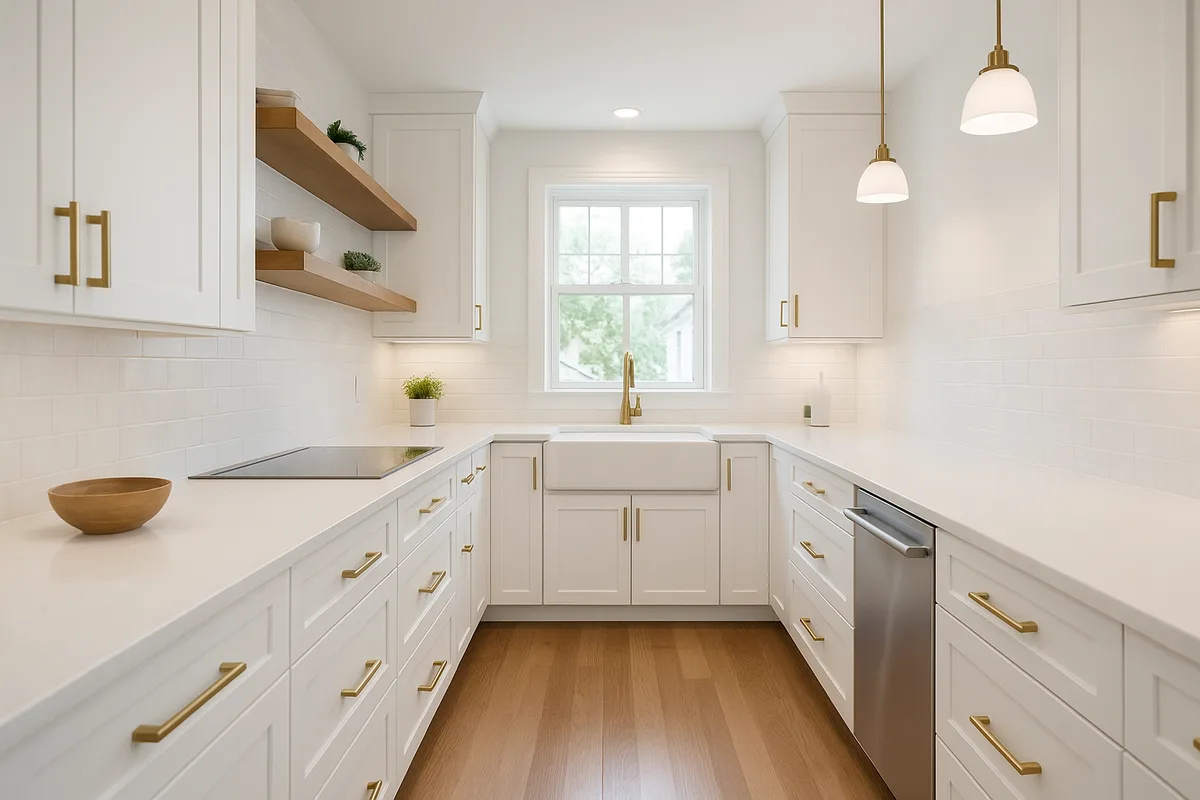
Shaker-style cabinets are one of the most popular choices for both modern and traditional homes in 2026. This style features a simple, clean design with a flat panel door and square edges. The minimalist nature of Shaker cabinets makes them highly versatile, fitting into a range of home styles, from rustic to contemporary. The plain design also allows for customization with different finishes and hardware, making them adaptable to many tastes.
Raised Panel Cabinets
Raised panel cabinets have a more ornate look, characterized by a door design where the center panel is slightly raised. These cabinets offer a more traditional and elegant style, often seen in classic or colonial-inspired kitchens and bathrooms. The raised panel design adds texture and depth to the cabinet, making them a statement piece in a room. If you're aiming for a luxurious or vintage feel in 2026, raised panel cabinets are a great choice.
Flat-Panel (Slab) Cabinets
For a sleek, modern look in 2026, flat-panel or slab cabinets are the go-to option. These cabinets have a solid, flat door without any frames or panels. They offer a minimalist aesthetic that complements contemporary or industrial spaces. Flat-panel cabinets are also known for their smooth finish and are often paired with modern hardware, like recessed handles or touch-latch mechanisms, for a streamlined appearance.
Inset Cabinets
Inset cabinets are a more refined option that features doors and drawers set inside the frame of the cabinet, rather than sitting on top of it. This creates a flush, precise look that exudes craftsmanship and quality. Inset cabinets tend to have a more traditional feel, though they can also work well in modern, high-end designs. They require precise construction and are typically more expensive due to the level of detail involved.
Distressed Cabinets
Distressed cabinets are designed to have an antique, worn look, and they remain a strong contender in 2026 for rustic appeal. This cabinet style is popular in rustic, farmhouse, or vintage-inspired spaces, where the charm of a "lived-in" aesthetic is desired. Distressed finishes can range from subtle wear to heavily chipped paint, and they pair well with vintage hardware. If you're going for a cozy, rustic vibe in 2026, distressed cabinetry might be your ideal choice.
Cabinet Style Comparison
| Style | Look / Aesthetic | Cost | Best For | Maintenance |
|---|---|---|---|---|
| Shaker Most Popular | Clean lines, recessed center panel, minimalist | $ (Affordable, versatile) | Both traditional and modern homes; colonial and contemporary alike | Easy — flat surfaces, simple to clean |
| Flat-Panel (Slab) | Sleek, uninterrupted surface, no ornamentation | $ (Affordable, simple construction) | Small kitchens, contemporary/open-concept homes | Very easy — no crevices or detail to trap grime |
| Raised Panel | Ornate, dimensional center panel, classic detail | $$–$$$ (More labor-intensive) | Traditional homes, larger open kitchens wanting a bold statement | Moderate — detail grooves need occasional attention |
| Inset Premium | Doors sit flush inside the face frame — precise, furniture-grade | $$$$ (Most expensive, most demanding install) | High-end traditional or modern designs; homeowners wanting a custom, crafted look | Precise — older/settled homes may need periodic re-adjustment |
| Distressed | Aged, hand-finished, rustic character (glazing, crackle, distress marks) | $$–$$$ (Finish premium on a Shaker or raised-panel base door) | Farmhouse and rustic-aesthetic kitchens | Moderate — finish, not the door, drives upkeep |
Factors to Consider When Choosing Cabinet Styles
While the look of the cabinets is certainly important in 2026, it's also vital to consider several functional factors when selecting cabinet styles. These will ensure that your cabinetry not only looks great but serves its purpose for years to come.
Space and Layout
The layout of your kitchen or bathroom in 2026 should influence your cabinet style. For smaller spaces, flat-panel or Shaker cabinets with light finishes can help create the illusion of more space. Conversely, if you have a large, open-plan area, you may have more freedom to explore raised panel or inset cabinets for a bold statement.
Budget
Cabinet styles vary widely in terms of cost. While Shaker and flat-panel cabinets tend to be more affordable due to their simple construction, inset and raised panel cabinets are more labor-intensive to make and typically come with a higher price tag. See Section 4: Cabinet Style & Cost below for a detailed breakdown of how each style affects your Delaware County project budget. Budget considerations should always factor into your decision, especially if you're remodeling and need to balance style with affordability in 2026.
Material and Finish
The materials used for your cabinets will also impact the style you choose. Solid wood, such as maple, oak, or cherry, works well for traditional or rustic cabinet styles like raised panel or distressed cabinets. For a modern look, engineered wood or MDF (medium-density fiberboard) with a sleek lacquer finish can be a great match for flat-panel cabinets.
Storage Needs
Functionality is at the heart of cabinetry in 2026, so think about how the cabinets will be used. If you're looking to maximize storage in a small kitchen, Shaker or flat-panel cabinets might be ideal, as they can be configured with pull-out shelves, deep drawers, and built-in organizers. For larger kitchens, you might opt for more decorative raised panel cabinets, which can also include built-in storage solutions such as pull-out spice racks or lazy Susans.
What Delaware County Homeowners Are Actually Choosing — and Why
Generic cabinet guides tell you what Shaker is. They don't tell you what families in Media, Swarthmore, and Haverford are actually putting in their kitchens — or why. After completing kitchen and custom cabinetry projects across Delaware County and the Main Line, we've seen clear patterns emerge in what homeowners choose and the reasoning behind it.
Shaker Remains the Dominant Choice
In our Delaware County kitchen projects, Shaker-style cabinets come up most consistently — and this tracks with what we see market-wide: Shaker remains the top choice across Delaware County and Chester County in 2026 (per our local cost guide). The reason has less to do with trend-chasing and more to do with architecture. Delaware County is home to a high concentration of colonial-era and mid-century homes. Shaker's recessed-panel geometry bridges that colonial DNA with modern stainless appliances and open-concept layouts without looking out of place in either direction.
ProBrothers Project — Kitchen
Two-Tone Kitchen Restoration
A client came to us wanting to transform an aging kitchen that needed a full gut-out — old cabinets, flooring, and appliances all out. The homeowner had seen two-tone kitchens online and wanted to know if the look was achievable at a realistic budget. The answer was yes: we built out a two-tone finish with a gray-and-white palette. The result was a cohesive upgrade that felt contemporary without losing warmth. The finish option — client-driven from the start — is something we see more often in Delaware County kitchens than in any other region we work in.
Cabinet Style in Open-Concept Renovations
When Delaware County homeowners open up their floor plans — removing walls to connect a kitchen to a living or dining area — the cabinet style choice becomes more visible. With higher ceilings and continuous sightlines to adjacent rooms, some homeowners opt for flat-panel (slab) cabinetry for its clean, uninterrupted look; others keep a Shaker profile but simplify hardware and finish to read lighter at scale. The key is that the style has to work at room-wide distance, not just close up at the cabinet doors.
ProBrothers Project — Full Home Remodel, Media, PA
BlackHorse House — Media, PA
During a full home remodel in Media, the kitchen footprint doubled in size as walls came down to connect it directly to the living room. The expanded kitchen became the central design statement of the home — exactly what you'd expect when a kitchen goes from a closed-off prep area to the heart of the house. When a kitchen renovation involves this scale of spatial change, the cabinetry choice matters at the room level, not just the cabinet level.
Custom Color as a Differentiator
One trend we see specifically in Delaware County's higher-end renovations is the move away from white-only kitchens toward deliberate color choices — deep blues, warm grays, sage greens. This isn't a paint-on-stock-cabinets decision; it requires a cabinet box and door construction that accepts premium paint well (MDF or furniture-grade plywood, factory primer, topcoat). When a homeowner wants a specific color that coordinates with custom metalwork or countertop material, the door style typically simplifies toward Shaker or flat-panel — because the color is the statement, not the millwork detail.
Cabinet Style & Cost: Delaware County Breakdown
The style you choose affects both material and labor costs. Below is a practical breakdown of how each style maps to the cost tiers ProBrothers works with in the Delaware County and Main Line PA market. Full per-project pricing is covered in our Kitchen Cabinet Costs in Media, PA (2026 Guide).
| Cabinet Style | Typical Tier | Cost Driver | Delaware County Fit |
|---|---|---|---|
| Shaker Most Popular | Stock to Semi-Custom $60–$650/lin. ft installed | Simple one-rebate door profile; labor-efficient to build. Cost rises with wood species (maple vs. oak vs. cherry) and finish complexity (two-tone, glaze). | Best all-around choice for Delaware County colonial homes. Works at every budget from stock to full custom. |
| Flat-Panel (Slab) | Stock to Full Custom $60–$1,200+/lin. ft installed | Door cost can be low (no routing needed) but premium slab doors in luxury lacquer or veneer drive costs up. Frameless box construction adds labor vs. face-frame. | Popular in open-concept renovations. Wide range: affordable for budget projects, high-end for lacquer/glass-front designs. |
| Raised Panel | Semi-Custom to Custom $100–$1,200+/lin. ft installed | Multiple router passes per door; more finishing steps. Premium wood species (cherry, alder) add material cost. Not typically available in stock tier. | Suited to formal traditional Delaware County homes (Victorian, Colonial-era). Typically mid-to-upper budget. |
| Inset Premium | Semi-Custom to Custom Upper semi-custom to $1,200+/lin. ft installed | Precision fitting: doors must seat flush inside the face frame with tight, even gaps. Labor-intensive; adds approximately 10–15% to a comparable overlay build. | Sought after in historic home restorations throughout Delaware County and West Chester. Furniture-grade result; long lead times. |
| Distressed | Semi-Custom $100–$650/lin. ft installed | Base door (Shaker or raised panel) plus a hand-applied finishing premium (glazing, distress marks, crackle). The door itself isn't complex; the finish is the cost. | Used in farmhouse, rustic, or cottage-style renovations in the region. Not a dominant choice in Delaware County's traditional or contemporary markets. |
| Cost ranges per linear foot are installed rates (supply + labor) for the Delaware County / Main Line PA market. Full project cost depends on kitchen size, layout complexity, and hidden costs (demo, electrical, plumbing). See Kitchen Cabinet Costs in Media, PA for full breakdowns. | |||
From the Workshop: What Daniil Notices After 15+ Years of Installations
Cabinet guides cover what each style looks like. What they rarely address is what you discover once you're actually in a Delaware County home with a tape measure, a level, and 15 years of installation experience behind you. Here's what I've learned on the job.
Daniil Akulov
The first thing I check when I walk into a Delaware County kitchen isn't the layout or the lighting — it's the walls. Older homes in Media, Swarthmore, and Haverford were built with plaster, not drywall. Plaster is harder, denser, and significantly less forgiving of imprecise anchoring. When you're hanging a row of upper cabinets on a plaster wall, you cannot afford to be off on your stud locations or your shimming. The cabinets look fine from 10 feet away if you're a fraction of an inch out; they look wrong from 3 feet away, and the homeowner will notice it every time they open the doors.
"Shaker is the style I recommend most often — not because it's trendy, but because it's genuinely versatile. I've put Shaker cabinets in homes built in 1890 and homes built in 2008 and they've worked in both. No other style has that range."
On why Shaker dominates Delaware County kitchens: The colonial architecture of this region gives most homes a certain character — crown moldings, wainscoting, symmetrical windows. Shaker's recessed panel sits comfortably next to that tradition without looking like a museum piece. At the same time, pair it with modern hardware and a contemporary countertop and it doesn't fight the update. That's a rare combination. Flat-panel is cleaner, but it can look clinical in a home with a lot of traditional trim detail. Raised panel can look heavy in a kitchen that's received modern appliances and light-colored counters.
"The Mid-Atlantic climate is genuinely hard on cabinetry. Humid summers, dry winters — wood moves. If you're doing solid-wood doors in a face-frame build, you need floating panel construction or you'll get cracking at the glue joints. I've seen beautiful raised-panel doors with cracks running down the panel within two winters because someone glued them up solid."
On inset cabinets: Inset is the most demanding install I do. The gap between the door and the face frame has to be even — top, bottom, both sides. I'm talking 1/16" variation at most. On a new house with drywall and fresh framing, that's achievable. On a 1940s colonial in Swarthmore where the floor has settled over 80 years, you're shimming, adjusting, and re-checking constantly. Inset cabinetry in an older home costs more because it takes longer — not because the doors are more expensive, but because the installation is much more precise. Clients who want that furniture-grade look get it, but they need to go in with realistic expectations about timing and budget.
On two-tone finishes: Two-tone kitchens have become genuinely popular in Delaware County over the past two years. The key thing homeowners need to understand is that a two-tone kitchen works best when the two colors are coordinated at the design stage, not chosen separately on site. I've seen projects where the upper cabinet color was picked first and the lower selected as an afterthought — and the result looked like a mistake. When it's planned from the start with the countertop and hardware in mind, it's one of the strongest visual outcomes I've seen in a residential kitchen.
"Most clients underestimate drawer weight capacity for a pantry-conversion cabinet. When we're converting a base cabinet into a full pull-out pantry, clients often imagine a standard drawer slide can handle canned goods, bulk dry goods, and cookware all in one unit. Standard slides are rated for 75–100 lbs. A fully loaded pantry pull-out can exceed 150 lbs easily. We specify heavy-duty undermount slides rated for 150–200 lbs minimum on any pantry-conversion drawer. The material cost difference is real, but a failed slide at full load is a safety issue — not just an inconvenience."
In older Delaware County homes — particularly those built in the 1950s through 1980s with plaster walls — soft-close hinges solve a secondary problem that clients don't anticipate: plaster doesn't absorb vibration the way drywall does. In a home with plaster-and-lath construction, repeated cabinet slamming eventually works loose the mounting screws in the cabinet face frame. We've done cabinet repairs on older homes where the hinges are literally pulling out of the frame because the previous installation didn't account for this. Soft-close hardware eliminates that impact entirely.
On open shelving: it's beautiful in photos, and I install it when clients want it. But in Delaware County kitchens — especially older homes where cooking happens seriously — the grease and humidity load is real. I typically recommend limiting open shelving to one accent area of the kitchen and using closed cabinets for primary storage. The clients who ignore this advice almost always come back wanting to close it up within two years.
One thing I've learned about hardware specifically: the finish has to survive the environment, not just look right at install. In bathrooms and kitchens with steam — especially in homes without great ventilation — we recommend brushed nickel or matte black over polished chrome, because polished finishes show water spots and start looking worn much faster. It's a small decision that people regret when they don't make it at the start.
How Cabinet Style Complements Your Home's Overall Design
Cabinet style should harmonize with the other design elements in the room. For example, in a modern home with clean lines and minimalist decor, flat-panel cabinets with sleek hardware are a perfect fit. For more traditional homes, Shaker or raised panel cabinets can complement other classic features, such as crown molding, hardwood floors, and wainscoting, an aesthetic that remains timeless into 2026.
It's also important to think about the color and finish of your cabinets in relation to the rest of the space. White or light-colored cabinets can open up a room, while dark cabinets add drama and richness. If you're working with a specific color scheme or design theme, choose a cabinet style that either contrasts or complements those tones.
Sliding Drawers: Convenience and Accessibility
Sliding drawers are a popular and highly practical feature, especially for kitchens and bathrooms in 2026. They provide easy access to items in the back of cabinets, making it simpler to organize and retrieve everything from pots and pans to cleaning supplies. They're especially useful for lower cabinets, where bending down to access items can be a hassle. Sliding drawers can be customized with dividers or organizers to make the most of available space, allowing for everything from utensil storage to full pull-out pantry shelving—an increasingly popular choice in 2026 home designs.
Pros of Sliding Drawers:
- Increased accessibility – No more reaching or digging around in deep cabinets.
- Better organization – Ideal for storing small items like spices, utensils, or cleaning products.
- Maximized space – Allows you to store more efficiently by using the depth of cabinets.
Cons of Sliding Drawers:
- Cost – Sliding drawers are more expensive than traditional shelves or doors due to the mechanisms involved and the materials needed.
Sliding drawers can range from $100 to $500 per drawer depending on the materials and the level of customization. The price will increase if you're opting for high-end materials or specialized features such as soft-close mechanisms, which are trending in 2026.
Open Cabinets and Open Shelving: A Trendy, Accessible Option
Open cabinets have gained popularity in modern home designs for their minimalist, airy feel, and this trend continues into 2026. This style of cabinetry does not have doors or fronts, providing direct visibility and easy access to your items. Open shelves or cabinets are often used to display decorative items, cookware, or dishware in kitchens, while in bathrooms, they can hold towels or toiletries—a stylish yet practical choice for 2026 interiors.
Pros of Open Cabinets:
- Visual appeal – Open shelves allow for showcasing beautiful dishware, plants, or other decorative items.
- Easy access – No need to open a door or pull out a drawer; items are instantly visible and accessible.
- Spacious feel – Open cabinets make a room feel less cluttered and more open, which is particularly useful in smaller spaces.
Cons of Open Cabinets:
- Dust and dirt accumulation – Items on open shelves or in open cabinets are exposed to dust, grease, and moisture.
- Clutter can accumulate – Without doors to conceal items, open shelving can easily become cluttered if not regularly organized.
Open cabinets are generally less expensive to install than traditional closed cabinets, as they don't require doors or complex mechanisms. Prices will vary depending on the material and whether you're opting for custom-built open shelving. Typically, expect to pay $50 to $300 per shelf, with high-end finishes pushing the cost higher in 2026.
Shelves: Versatile and Practical
Shelves are one of the most versatile cabinetry features you can incorporate into your design. They can be installed in any room, offering functional storage for everything from books and plants to pantry items and bathroom essentials. Shelves can be either open or enclosed within cabinets, and their placement can vary based on your storage needs and design preferences—making them a staple in 2026 home renovations.
Pros of Shelves:
- Flexible storage – Shelves can hold a variety of items, from pantry goods to decorative objects.
- Customizable – You can adjust the number of shelves or their height to accommodate your specific needs.
- Affordable – Shelves are often one of the most cost-effective cabinet features available.
Cons of Shelves:
- Open shelves require regular maintenance – Like open cabinets, shelves are prone to dust and can become cluttered quickly if not kept organized.
The cost of shelves varies significantly depending on whether they are custom-built or pre-made, as well as the material used. Basic shelves can cost as little as $20 to $100 per unit for a simple, wooden shelf, while custom shelves or shelves made from premium materials (like glass or metal) can range from $150 to $500 per unit.
How Much of Each Cabinet Feature Do You Need?
The amount of sliding drawers, open cabinets, and shelves you incorporate into your design will depend on both your storage needs and your budget. Here are a few guidelines to help you balance functionality and cost:
- Sliding Drawers: If you cook often and need easy access to items like spices, utensils, or pots, consider adding sliding drawers to your kitchen design. For bathrooms, sliding drawers can be perfect for toiletries or cleaning supplies. However, because they are more expensive, you may want to prioritize these features in cabinets that will be used the most in 2026.
- Open Cabinets: Open shelving works well in spaces where you want to showcase items and create an airy, minimalist look. In kitchens, open cabinets can work well for frequently used items like plates and cups. However, if you don't want the added maintenance of keeping your items dust-free, you may want to limit the amount of open shelving.
- Shelves: Shelves are highly versatile and can be used in almost any area. They're an affordable option for adding storage in both kitchens and bathrooms. If your budget is limited, shelves are a great way to maximize space without breaking the bank.
Which Cabinet Features Are More Expensive?
As mentioned, sliding drawers tend to be the most expensive feature due to the additional materials and labor required for installation. Open cabinets, on the other hand, are typically the most budget-friendly option, as they don't require doors or complex mechanisms. Shelves fall somewhere in between, depending on their customization.
Cost Breakdown:
- Sliding Drawers: $100 to $500 per drawer
- Open Cabinets: $50 to $300 per shelf
- Shelves: $20 to $500 per unit (depending on customization and material)
Choosing the right combination of cabinet features for your space in 2026 requires balancing your needs for functionality, aesthetics, and budget. Sliding drawers offer exceptional accessibility but can be costly, while open cabinets and shelves are more affordable options that can still provide great storage and design flexibility.
Top 5 Cabinet Features ProBrothers Clients Actually Request
Generic feature lists tell you what exists. What follows is grounded in what Delaware County and Main Line PA homeowners actually choose when they sit down with our team — drawn from ProBrothers' project history across kitchens, bathrooms, home offices, and custom built-ins.
Soft-Close Hinges and Drawer Slides
In our experience, soft-close hardware is the single most frequently added upgrade on kitchen and bathroom cabinet projects. Clients initially ask about it for the quiet factor — nobody wants slamming cabinet doors in a busy household. But the real reason to specify it is longevity: soft-close mechanisms reduce frame stress significantly over the life of the cabinet, which matters especially in older Delaware County homes where humidity and temperature swings can stress wood joints. Cost reference: soft-close hardware upgrades run approximately $25–$75 per door or drawer at Delaware County installation rates.
Pull-Out Drawer Systems for Base Cabinets
Pull-out drawers in lower base cabinets are the most transformative functional upgrade for kitchens where the client cooks regularly. Rather than reaching past stacked pots into the back of a deep cabinet, every item is accessible from the front. We see this most commonly in kitchen renovation projects where clients specify pull-outs for pot storage, baking sheets, and pantry conversion areas. This is also where drawer weight capacity becomes critical — see the installer's note below.
Custom Drawer Inserts and Organizers
Especially popular in kitchen and home office projects, custom drawer inserts — dividers for utensils, compartments for small tools, knife blocks, or pen/notebook trays — allow homeowners to design the interior of their cabinets around how they actually live. Our Dark Blue Office project (Chester County area) is a good example: the client specified multiple small drawer compartments alongside large file storage, so the workspace stayed organized and professional-looking without appearing crowded.
Under-Cabinet Lighting
Under-cabinet lighting is requested on a significant share of our kitchen and bathroom vanity projects. It serves two purposes: functional task lighting on countertops, and ambient accent lighting that elevates the look of the space. In vanity projects we've done across Delaware County — including custom vanity builds where the client wanted makeup-ready lighting — LED strips under upper cabinets made a notable difference in the finished result.
Floor-to-Ceiling Custom Storage
For rooms where every inch of wall space matters — home offices, libraries, mudrooms, and laundry rooms — clients increasingly request floor-to-ceiling custom cabinetry rather than freestanding furniture. Our Blue Library project is the most complete example: a spare room transformed with a full wall of floor-to-ceiling bookshelves, a matching closet on the opposite wall, ceiling beams, and paneling throughout. The sliding ladder we built for the upper shelves is the kind of detail that only a custom-built solution can deliver.
ProBrothers Project — Custom Built-In Cabinetry
Blue Library — Floor-to-Ceiling Custom Build
A book-loving client came to us wanting to transform a spare room into a home library. The requirement: floor-to-ceiling bookshelves spanning wall to wall, with a closet on the opposite side for personal storage, and ceiling beams to complete the room. Every cabinet was custom-made and finished in the shop before installation on site. To solve the reach problem at the top shelves, we built a sliding ladder into the bookcase — a feature that only works when the cabinet structure is engineered for it from the start. We also panel-walled the room and added trim to make everything look continuous. The result: a room that went from empty to architecturally finished.
Feature Add-On Costs in Delaware County — Per-Feature Breakdown
Most cost guides show total kitchen or bathroom renovation figures. What homeowners in Media, PA and surrounding Delaware County communities actually want to know is: how much does each specific feature add to the total? The table below breaks it down by feature, sourced from ProBrothers' project pricing in the Philadelphia metro market and cross-referenced with the ProBrothers 2026 kitchen cabinet cost guide.
| Feature | Unit | Material Cost Range | Notes |
|---|---|---|---|
| Soft-close hinges Most Requested | Per door/drawer | $25 – $75 | Longevity upgrade; reduces frame wear; recommended standard on custom builds |
| Pull-out drawer (base cabinet) | Per drawer | $100 – $500 | Price varies by weight capacity and slide mechanism; pantry-conversion drawers require heavy-duty slides |
| Custom drawer inserts / organizers | Per drawer | $50 – $300 | Knife blocks, utensil dividers, and pen/notebook trays; fully custom vs. modular pricing differs |
| Under-cabinet LED lighting | Per linear foot | $20 – $60 | Functional task lighting and ambient accent; often quoted separately from cabinetry |
| Pull-out spice rack / pantry unit | Per unit | $150 – $500 | High ROI in kitchens with limited counter space; common in Delaware County galley kitchen renovations |
| Lazy Susan (corner cabinet) | Per unit | $80 – $250 | Full-round vs. kidney-shape; full-round preferred for accessibility |
| Glass-front door panels | Per door | $100 – $400 | Clear, seeded, or frosted; requires interior lighting to show impact |
| Full custom built-in (e.g., floor-to-ceiling shelving) | Per project | $2,000 – $15,000+ | Highly scope-dependent; Blue Library project is an example of this tier |
| Sources: ProBrothers 2026 Kitchen Cabinet Cost Guide; Remodeling Magazine Cost vs. Value Report (Philadelphia metro). Contact ProBrothers for a project-specific quote at (484) 745-4097. | |||
Cabinet Cost by Tier: Stock, Semi-Custom and Custom
Style and features set the character of a kitchen; the tier you buy at sets the budget. Nearly every cabinet quote in Delaware County falls into one of three tiers, and the spread between them is wide enough that picking the tier first saves a lot of wasted design time.
| Cabinet Tier | Typical Kitchen Cost | Per Linear Foot | Lead Time |
|---|---|---|---|
| Stock | $3,000 – $8,000 | $60 – $200 | In stock to 2 weeks |
| Semi-custom | $8,000 – $20,000 | $100 – $650 | 4 – 8 weeks |
| Custom | $20,000 – $50,000+ | $500 – $1,200+ | 4 – 16 weeks |
Stock cabinets
Pros: fast availability, lowest cost, widely stocked at major retailers. Cons: limited styles, sizes and finishes, and a poor fit for the non-standard wall runs common in older Delaware County houses — expect filler panels where a custom box would have fit the wall.
Semi-custom cabinets
Pros: far more flexibility, better box construction, a wide range of finishes and configurations. Cons: a 4–8 week manufacturing lead time and a higher upfront cost than stock. For most homeowners this tier is the value sweet spot — roughly 80% of custom quality at around half the price.
Custom cabinets
Pros: an exact fit to your space, premium materials, and a design built around how you actually use the room. Cons: a 4–16 week build timeline and the highest cost tier. Custom earns its money in two situations: awkward footprints where stock boxes waste usable space, and forever homes where the cabinetry has to outlive several rounds of paint and appliances.
Stock vs. custom, side by side
| Factor | Stock | Custom |
|---|---|---|
| Cost | $60 – $200/linear ft | $500 – $1,200+/linear ft |
| Lead time | In stock / 1–2 weeks | 4–16 weeks |
| Size options | Standard only | Any dimension |
| Material quality | Variable | Your choice |
| Resale value | Moderate | High |
| Design flexibility | Low | Unlimited |
| Best for | Budget flips, rentals | Forever homes, awkward footprints |
Where the Money Actually Goes: Cost Breakdown by Component
A cabinet quote is not one number, and the components move independently. Knowing the split is what lets you tell a thin bid from a complete one.
| Component | Cost Range |
|---|---|
| Cabinet materials (stock) | $60 – $200/linear ft |
| Cabinet materials (semi-custom) | $100 – $650/linear ft |
| Cabinet materials (custom) | $500 – $1,200+/linear ft |
| Labor / installation | $50 – $150/hour |
| Hardware | $3 – $50+ per piece |
| Soft-close upgrades | $25 – $75 per door/drawer |
| Customization features | $200 – $2,000+ |
| Old cabinet removal | $300 – $700 |
Materials are the biggest single driver. Solid wood (maple, cherry, oak) commands premium pricing; MDF and plywood deliver durability for less. Labor in Pennsylvania typically runs $50–$150 per hour, and most kitchen installs take one to three days depending on complexity. Installation is not just hanging boxes — it is levelling, shimming, scribing to out-of-plumb walls and fitting the toe kick, which is where the hours go in an older house. Hardware adds up fast: a full kitchen with 30 doors and drawers can take $300–$1,500 in knobs, pulls and hinges alone. Customization — pull-outs, spice racks, lazy Susans, glass fronts, integrated lighting — can add $500–$5,000+ on its own.
One line that is almost always quoted separately is the trim that finishes the cabinet run into the ceiling. If your cabinets are going to full height, price it in from the start — see crown molding installation costs in Delaware County.
Cabinet Budget by Kitchen Size
A quick sanity check before you shortlist styles. These are cabinet-only budgets — countertops, appliances and flooring are separate.
| Kitchen Size | Cabinet-Only Budget |
|---|---|
| Small (under 100 sq ft) | $3,000 – $12,000 |
| Medium (100–200 sq ft) | $10,000 – $25,000 |
| Large (200+ sq ft) | $20,000 – $60,000+ |
Large open-concept kitchens, which are what most Delaware County wall-removal projects turn into, land at the top of that range once the island and the pantry wall are counted.
Cabinet Material Cost Comparison
Style decides how a door looks. Material decides what it costs and how long it lasts.
| Material | Cost per Linear Foot | Durability | Best For |
|---|---|---|---|
| Solid wood (oak, maple, cherry) | $200 – $600+ | Very high | Luxury kitchens |
| Plywood (box construction) | $150 – $400 | High | Mid-range to custom builds |
| MDF | $100 – $300 | Medium | Painted finishes |
| Laminate | $60 – $200 | Medium–low | Rentals, budget remodels |
| Thermofoil | $80 – $200 | Medium | Modern flat-panel style |
Price impact by door style
The door style itself carries a surcharge on top of the material. Shaker doors add roughly $15–$50 per door over basic flat-panel pricing. Flat-panel or slab doors are often the cheapest to manufacture and are the default for European-style frameless boxes. Raised-panel doors — the traditional look in a lot of older Delaware County houses — run $20–$75 more per door than flat panels because of the extra milling. Glass fronts add $50–$200+ per door, plus interior cabinet lighting if you want the look to work at night. For market-level benchmarks, the Remodeling Magazine Cost vs. Value Report tracks kitchen remodel ROI annually across U.S. markets including Philadelphia metro.
Six Ways to Cut Cabinet Cost Without Cutting Quality
- Reface instead of replace. Replacing only doors and drawer fronts costs 40–60% less than full replacement, and it is a genuinely good outcome when the existing boxes are solid plywood and the layout already works.
- Buy during sale windows. January and July promotions can save 20–30% on stock and semi-custom lines.
- Choose semi-custom over custom. In most kitchens you get about 80% of the quality for about half the price.
- Mix materials by position. Put solid wood and glass on the uppers where they are seen; use lower-cost materials on base cabinets that live behind closed doors.
- Keep the existing layout. Moving plumbing and electrical adds $1,000–$5,000+ before a single cabinet is hung.
- Order spares in the first order. One extra door and drawer front ordered up front costs a fraction of a reorder two years later, when the finish batch may no longer match.
Choosing the Wood: What Works in Each Room
Cabinet style is a decision about appearance. Wood species is a decision about physics — how the door handles heat, steam, grit and fifteen winters of dry indoor heat. The right answer changes room by room.
Kitchen cabinets: durability meets appearance
Kitchens are high-traffic and cabinets there take heat, moisture and daily knocks.
- Maple: durable, moderately priced, with a smooth even texture. It takes paint exceptionally well, which makes it the default for painted Shaker doors.
- Oak: strong and wear-resistant, in red and white varieties. White oak is slightly more durable and is usually the one chosen for contemporary and modern-organic designs.
- Cherry: a deep reddish-brown that darkens with age. More expensive than maple or oak, and worth it where you want the cabinetry to read as furniture.
Bathroom cabinets: moisture resistance first
Bathroom cabinets live with humidity, steam and splashes, so moisture behaviour outranks looks.
- Teak: naturally moisture-resistant with a handsome grain — the choice for a spa-like vanity.
- Cedar: resists moisture and mildew, and is aromatic.
- Pine: cheaper and easy to work, but it needs a strong, well-maintained finish to survive bathroom humidity.
Mudroom cabinets: tough and practical
- Plywood: durable and affordable, highly resistant to warping, and fine once coated.
- Birch: a strong, affordable hardwood with a pale fine grain that takes stain or paint evenly.
- Maple: the solid-wood option if you want the mudroom to match the kitchen.
If a mudroom is on your list, the build sequence matters as much as the wood — see mudroom additions in Delaware County.
Office and library cabinets: function and presence
- Oak or cherry: strong hardwoods that give an office a timeless, professional look.
- Walnut: deep, rich and smooth — the executive-office wood, and the most expensive on this list.
- MDF: not a species, but affordable, stable and easy to paint for built-ins that will be a solid colour anyway.
Wood type comparison
| Wood | Durability | Cost | Grain / appearance | Best use | Maintenance |
|---|---|---|---|---|---|
| Maple | High | $$ moderate | Smooth, fine, subtle grain — takes paint beautifully | Kitchen cabinets, painted contemporary finishes | Low |
| White oak | High | $$ moderate | Strong, open, visible grain — natural texture | Kitchen cabinets, modern organic designs | Low |
| Cherry | High | $$$ premium | Deep reddish-brown, darkens with age | Kitchens and offices wanting an elegant finish | Moderate |
| Birch | Moderate–high | $ affordable | Pale, fine grain — stains and paints evenly | Mudrooms, painted boxes on a budget | Low |
| Walnut | High | $$$$ most expensive | Deep dark tones, smooth finish | Offices, libraries, statement cabinetry | Moderate |
For sustainably sourced timber, look for certification from the Forest Stewardship Council (FSC), the internationally recognised standard for responsible forest management and chain-of-custody tracking.
Choosing the Finish: What Protects the Wood
The finish decides how the cabinet looks and how long it survives. Four finishes cover almost every residential cabinet job.
Polyurethane — the all-purpose protector
Durable, water-resistant and straightforward to apply, which is why it is the most common finish on kitchen and bathroom cabinets. Oil-based polyurethane has a rich amber tone that suits oak and cherry. Water-based is clearer and dries faster, which makes it the better choice on lighter woods and on tight schedules.
Painted finishes — modern and sleek
The default for Shaker and contemporary doors, and the reason maple and MDF are so widely used. Acrylic or enamel paints give a smooth, scratch-resistant surface and are available from matte through high gloss.
Stain — keeping the grain visible
Staining highlights grain and texture rather than hiding it, from light honey through dark espresso. Oil-based stains penetrate deeper for richer colour; water-based stains clean up more easily and lay down lighter and more evenly.
Lacquer — glossy and hard-wearing
Common on high-end kitchen and bathroom cabinets, clear or tinted, with a hard protective coat that resists scratches, moisture and stains.
From the Workshop: Why Wood Movement Decides the Outcome
I'm Daniil Akulov, founder of ProBrothers. I have been building and installing cabinets in Delaware County and the Main Line for 15 years, and the honest answer to “what is the best wood” is almost always “it depends on the room I'm standing in.” On kitchen jobs I reach for maple more than anything else — it machines clean, takes paint evenly, and I rarely see it cup or warp even in the older houses we work in around Media and Newtown Square. When a client wants more presence, cherry or walnut go into offices and statement pieces, not high-humidity rooms.
Here is the thing that does not make it into most buying guides: how the wood is going to move. Solid wood expands and contracts with the seasons, and the Mid-Atlantic swings hard between humid summers and dry winter heat. I have been called back to more than one house where a contractor built face frames dead-tight in July and by January every door had a hairline gap or a sticking hinge. We build in expansion tolerance at the joinery stage and let panels float where they need to. That is the difference between cabinets that still close right five winters later and ones that don't — and it is worth asking any cabinetmaker how they handle it before you sign.
Tips for Finding the Best Cabinet Styles and Features for Your Space
- Match the Style to Your Home's Architecture: Choose a cabinet style that complements the architectural features of your home. For example, raised panel cabinets may be better suited for a colonial-style home, while flat-panel cabinets are perfect for a contemporary urban apartment.
- Consider the Room's Purpose: A kitchen needs cabinets that are durable, easy to clean, and functional, whereas bathroom cabinets might prioritize compactness and storage. Be sure the style fits your space's specific requirements in 2026.
- Think About Long-Term Appeal: While it's tempting to go for a trendy cabinet style, remember that cabinetry is a long-term investment. Choose a timeless style that will still look great in years to come.
Conclusion: Finding the Perfect Cabinet Styles and Features
Choosing the right cabinet style can be an exciting, yet daunting task, but by considering the architecture of your home, your space's needs, and your budget, you can make an informed decision. Whether you lean toward classic Shaker cabinets, the sleekness of flat-panel designs, or the elegance of raised panels, there's a perfect cabinet style out there for every home and every homeowner.
Remember, cabinets aren't just storage solutions—they're an integral part of your home's overall design. So, choose wisely, and don't be afraid to ask for professional advice to ensure you get the best cabinetry for your project. Whether you're building new or remodeling, the right cabinet style will make your space functional, beautiful, and uniquely yours.
Frequently Asked Questions: Cabinet Styles, Features, Wood, Finishes and Cost
What is the most popular kitchen cabinet style for 2026?
Shaker-style cabinets remain the top choice for homeowners in 2026 due to their timeless, minimalist design. Their clean lines and recessed center panels make them versatile enough for both modern farmhouse and contemporary urban designs in the Greater Philadelphia area. They are also highly customizable with different hardware and paint finishes, ensuring long-term resale value.
Are inset cabinets worth the extra cost?
Yes, inset cabinets are widely considered a premium investment because of their precise craftsmanship. Unlike overlay cabinets, the doors and drawers are fitted flush inside the cabinet frame. This creates a high-end, furniture-like appearance that is particularly sought after in historic home restorations throughout Delaware County and West Chester.
Which cabinet style is best for a small kitchen?
For small kitchens, flat-panel (slab) or Shaker cabinets with a light-colored finish are best. Their lack of ornate detail prevents the space from looking cluttered, while light colors reflect natural light to make the room feel larger. In smaller homes across Media and Springfield, PA, we often recommend white or light gray cabinetry to maximize the sense of space.
What is the difference between solid wood and MDF cabinet doors?
Solid wood (like Maple or Oak) is prized for its durability and natural grain, making it ideal for stained finishes. However, MDF (Medium-Density Fiberboard) is often preferred for painted cabinets because it does not expand or contract with temperature changes, preventing the paint from cracking at the joints – a common issue in the humid Mid-Atlantic climate.
How can I match my cabinets to my home's architecture?
To ensure a cohesive look, match the cabinet detail to your home's era. For a Colonial or Victorian home in Pennsylvania, raised-panel or inset cabinets complement the architectural history. For a modern industrial loft in Philadelphia, flat-panel slab cabinets with minimalist hardware provide the sleek, streamlined aesthetic required for contemporary living.
Do custom cabinets increase home value more than stock cabinets?
Absolutely. High-quality cabinetry is one of the first things buyers notice in a kitchen. Custom cabinets offer superior storage solutions, better materials, and a perfect fit for your specific layout. In competitive markets like Kennett Square and Malvern, custom cabinetry can significantly differentiate your home and provide a higher return on investment (ROI) during a renovation. Annual cost-return data from the Remodeling Magazine Cost vs. Value Report consistently shows kitchen upgrades — including cabinetry — among the top ROI projects for homeowners in the Philadelphia metro market.
What are the most functional cabinet features for a 2026 kitchen remodel?
The most functional features for 2026 include sliding pull-out drawers, built-in organizers, and soft-close mechanisms. Sliding drawers are particularly essential for lower cabinets in kitchens and bathrooms, as they eliminate the need to reach into deep, dark corners. These features significantly improve accessibility and organization, making them a top priority for homeowners in areas like Media and West Chester, PA.
Are sliding cabinet drawers more expensive than traditional shelves?
Yes, sliding drawers generally cost more than standard fixed shelves due to the precision hardware and labor required for installation. In 2026, you can expect to pay between $100 and $500 per drawer depending on the material and weight capacity. However, many homeowners find the long-term benefit of increased storage efficiency and reduced physical strain well worth the initial investment. For pantry-conversion drawers specifically, heavy-duty slides (rated 150–200 lbs) are recommended — standard slides are not adequate for fully loaded pantry pulls.
Should I choose open shelving or closed cabinets for my kitchen?
The choice depends on your lifestyle. Open shelving creates a trendy, airy feel and is perfect for displaying decorative dishware or frequently used items. However, closed cabinets are better for hiding clutter and protecting items from the dust and grease common in Pennsylvania kitchens. Many ProBrothers clients opt for a hybrid approach — using closed cabinets for bulk storage and open shelves for a minimalist, modern aesthetic. In older Delaware County homes with active cooking, we typically recommend limiting open shelving to one accent area.
What is the benefit of adding soft-close hinges to cabinets?
Soft-close hinges and drawer slides prevent doors from slamming, which reduces wear and tear on the cabinet frames and extends the life of your cabinetry. This feature is particularly important in older Delaware County homes with plaster-and-lath construction, where cabinet slamming gradually works loose the hinge mounting screws. Soft-close hardware costs approximately $25–$75 per door or drawer and is one of the highest-value upgrades for long-term cabinet performance.
How much does it cost to add custom storage features to existing cabinets?
The cost to add custom features like pull-out spice racks or heavy-duty pot drawers typically ranges from $150 to $500 per unit. Investing in these specialized storage solutions during a renovation can significantly increase your home's resale value, especially in competitive markets like Kennett Square and Malvern, where buyers look for highly organized, chef-ready kitchens. According to the Remodeling Magazine Cost vs. Value Report, kitchen upgrades — including custom storage features — consistently rank among the highest-ROI investments homeowners can make before listing.
Are open cabinets harder to maintain than closed ones?
Yes, open cabinets require more regular maintenance because items are exposed to the air. In Delaware County kitchens, this means dust and cooking oils can accumulate on the shelves and dishes. If you prefer a low-maintenance kitchen, limit open shelving to a few accent areas and use closed cabinetry for primary storage needs.
What hardware finish holds up best in a Delaware County kitchen or bathroom?
In bathrooms and kitchens with steam — especially older homes without great ventilation — brushed nickel or matte black finishes outperform polished chrome over time. Polished finishes show water spots more readily and look worn faster. The finish decision is small at install time but one that clients frequently revisit when they don't make it deliberately at the start.
How much do kitchen cabinets cost in Media, PA?
Kitchen cabinet costs in Media, PA and the surrounding Delaware County area range from $3,000–$8,000 for stock cabinets, $8,000–$20,000 for semi-custom, and $20,000–$50,000+ for fully custom cabinets. Per linear foot pricing runs $60–$200 for stock, $100–$650 for semi-custom, and $500–$1,200+ for custom. Small kitchens typically land at the lower end; large open-concept kitchens can reach $30,000–$60,000 for premium options.
What is the cheapest type of kitchen cabinet?
Stock kitchen cabinets are the most affordable option, typically costing $60–$200 per linear foot, with a full kitchen installation running $3,000–$8,000 total. They are available immediately from major retailers and work well for budget remodels, rental properties, and flips where a quick turnaround matters more than a perfect fit. The trade-off: limited styles, standard sizes only, and lower material quality compared to semi-custom or custom options.
What hidden costs should I budget for when replacing kitchen cabinets?
Add a 10–15% contingency beyond your cabinet budget for hidden costs that commonly surface during installation: removal and disposal of old cabinets ($300–$700), wall repairs if damage is found behind them ($200–$800), electrical adjustments ($150–$600), plumbing adjustments ($300–$1,500), countertop replacement ($2,000–$8,000+), and permit fees ($75–$300). These are not surprises with ProBrothers — we surface them in the initial assessment.
How long does it take to get custom kitchen cabinets made and installed?
Timeline depends on the cabinet tier. Stock cabinets are available within 1–2 weeks. Semi-custom cabinets have a manufacturing lead time of 4–8 weeks. Fully custom cabinets take 4–16 weeks from order to delivery. Add 1–3 days for professional installation, more for large or complex kitchens. ProBrothers factors lead times into your project schedule upfront so the kitchen remodel timeline is realistic from day one.
Are custom kitchen cabinets worth the extra cost?
For a forever home or a kitchen you plan to use for 10+ years, custom cabinets are worth the premium. They offer a perfect fit for non-standard layouts, including corner solutions, around-window runs and ceiling-height installations, plus premium material choice, unlimited design flexibility and significantly higher resale value. In competitive Delaware County and Main Line PA markets, custom cabinetry is one of the first things buyers notice and value.
What is the difference between framed and frameless kitchen cabinets?
Framed (face-frame) cabinets have a solid wood frame on the front of the box, giving the more traditional look common in Colonial and craftsman-style Pennsylvania homes. They are slightly less storage-efficient because the frame narrows the opening. Frameless (European-style) cabinets have no front frame — doors mount directly to the box — for a cleaner, more modern look and slightly more accessible storage. Both are available at custom, semi-custom and stock tiers.
Can I save money by doing cabinet refacing instead of full replacement?
Yes — cabinet refacing replaces just the door fronts, drawer fronts and visible exterior panels while keeping the existing cabinet boxes. It costs 40–60% less than full replacement and can be completed in 2–4 days with minimal disruption. Refacing makes sense when the box structure is still sound and square, you want to change the door style or colour, and your kitchen layout already works well.
What cabinet materials hold up best in a high-use kitchen?
For high-use kitchens in the Pennsylvania climate, the best-performing materials are solid wood (maple, oak, cherry) for doors and face frames, which is extremely durable with proper finishing; plywood box construction rather than particleboard for the carcass, which is more moisture-resistant; and soft-close hardware on all hinges and drawer slides to reduce wear on the doors themselves. Avoid thermofoil in high-heat areas near ovens, as it can delaminate.
What is the best wood for kitchen cabinets in 2026?
Maple and white oak are the most popular choices for kitchen cabinets in 2026 because of their durability and aesthetic versatility. Maple offers a smooth grain that suits contemporary painted finishes, while white oak is sought after for its strength and visible natural grain in modern organic designs. Both suit high-traffic kitchens in Media and West Chester, PA, as they resist daily wear.
Which wood is most resistant to moisture for bathroom cabinets?
Teak and cedar are the superior choices for bathroom cabinetry because of their natural resistance to moisture, steam and humidity. Teak contains natural oils that protect against warping, which makes it a good fit for high-humidity master baths. For a more budget-friendly but durable option, properly sealed maple is also a strong contender for bathroom vanities.
Is solid wood or MDF better for painted cabinets?
For a flawless, modern painted look, MDF (medium-density fibreboard) is often preferred for cabinet doors because it does not expand and contract with temperature and humidity the way solid wood does, which prevents paint cracking at the joints — a common problem in the humid Mid-Atlantic climate. For the cabinet boxes and high-use areas, maple or birch are excellent solid wood choices that provide structural integrity while taking paint beautifully.
What is the most durable cabinet finish for families with pets and children?
A polyurethane finish, particularly water-based, is the most durable option for busy households. It creates a hard protective shield that is water-resistant and easy to clean. For homeowners in the Delaware County area wanting a high-end look that is also tough, a lacquer finish gives a smooth, glossy surface that resists scratches and stains effectively.
How does the local climate in Pennsylvania affect cabinet wood choice?
The Mid-Atlantic climate swings significantly in seasonal humidity, which makes wood expand and contract. To prevent warping or sticking drawers, use structurally stable hardwoods such as maple, oak or cherry, and insist on expansion tolerance at the joinery rather than face frames built dead-tight. Finishing the cabinets with a high-quality sealant is equally important to protect against damp winters and humid summers.
Is walnut worth the higher price for a home office?
Yes, walnut is widely considered a premium investment for home offices and libraries. Its rich dark tones and sophisticated grain create an executive atmosphere, and it is durable and ages well. It is more expensive than oak or pine, so it earns its price in a room where the cabinetry is meant to be the feature — not in a high-humidity kitchen or bathroom.
From Our Work: Matching Cabinet Style to the House, Not the Trend
A client in Haverford wanted flat-panel modern cabinets in a stone farmhouse built in the 1930s. We walked her through a few Shaker-style mockups instead, which read cleaner against the home's existing trim and doorways without fighting the architecture. She went with Shaker in the end and told us later it was the right call — the kitchen still felt like it belonged to the rest of the house.
Get a Free Cabinet Design Consultation
ProBrothers specializes in custom cabinetry design and installation for kitchens, bathrooms, and beyond throughout Media, PA and Delaware County. Whether you're drawn to classic Shaker cabinets or sleek flat-panel designs, our team helps you choose the perfect style for your home.