

Table of Contents
Most contractor-hiring guides are written from the homeowner's seat. This one isn't. After 15 years and 135+ remodeling projects across Delaware County and the Main Line — Media, Swarthmore, Springfield, Havertown, Broomall — I've learned that the questions a contractor asks before starting a project matter just as much as the questions a homeowner asks when hiring one.
This guide shares both sides. You'll get the questions we ask every client at ProBrothers before a single wall is touched, the questions you should be asking us (and any other contractor you're evaluating), the Pennsylvania-specific legal requirements that protect you under HICPA and the PA Uniform Construction Code, and realistic 2026 cost ranges for Delaware County — not U.S. national averages, but real numbers from the Philadelphia metro market.
If you want the broad Pennsylvania contractor-law landscape, including HICPA registration requirements and licensing compliance, our post on top general contractors in Pennsylvania covers those in depth. This article focuses on the practical, project-level decisions.
What We Ask Every Client Before Starting — ProBrothers' Intake Process
Before we quote a project, we sit down with the client — in person or on a video call — and work through five questions. These aren't sales questions. They're the questions that determine whether our crew can actually deliver what the client is imagining.
1. What is the primary goal — function, aesthetics, or resale value?
These goals pull in different directions. A function-driven basement finishing project prioritizes waterproofing and electrical capacity over finishes. An aesthetics-driven kitchen remodel may justify higher-end cabinet faces even if the carcasses are builder-grade. A resale-focused renovation means we steer clients away from over-specifications that the local market won't price back in. Getting this answer first determines every material selection that follows.
2. What is your realistic budget — and does it include a 15–20% contingency?
In Delaware County, PA, older homes (particularly pre-1980 stock in Media, Springfield, and Swarthmore) frequently have surprises behind the walls: knob-and-tube electrical that must be brought to current PA UCC code, plumbing that needs re-routing, or structural framing that wasn't built to modern load standards. The contingency isn't optional — it's the difference between a smooth project and a scope renegotiation mid-demolition.
3. Do you have a hard deadline?
Holiday seasons, family events, and school-year starts are real constraints. We'd rather know your deadline on day one than try to compress the tail end of a project to hit a date we didn't know about. Rushed finishes are how projects that were 95% excellent end up with a single corner that bothers you for years.
4. Will the home be occupied during construction?
Occupied renovations change everything. We run HEPA-filtered dust containment, adjust work hours to fit your household schedule (including children and pets), and build a daily access/security protocol. For kitchen remodels where families need to eat, we set up a temporary kitchen station. This isn't extra — it's how we've operated since we started in Delaware County in 2009.
5. Which decisions do you want to make yourselves vs. delegate to us?
Some clients want to select every tile, fixture, and hardware finish. Others want to say "make it look great" and trust the team. Both are completely valid — but we need to know which you are before scheduling, because material selection decisions that come late are the number-one reason timelines slip.
ProBrothers intake principle: A project where the goals, budget, timeline, and decision-making style are aligned from day one takes an average of 15–20% less elapsed time than an identical scope project where these aren't established upfront. We've seen this pattern across 135+ projects.
BlackHorse House — Full Home Remodel, Media, PA
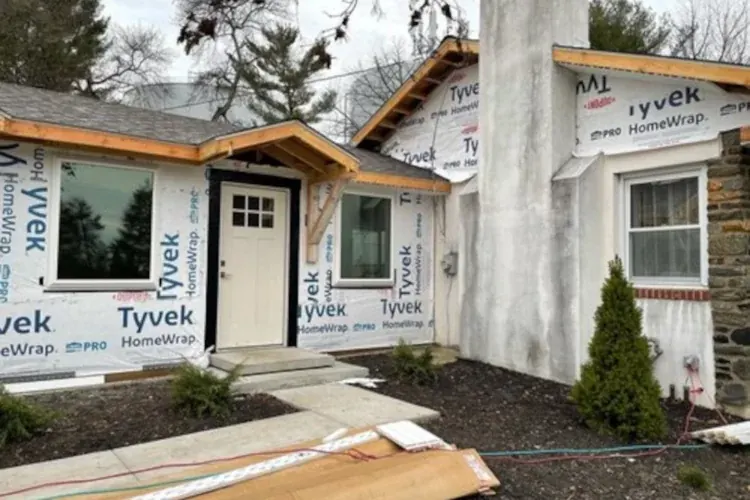
Scope: Full interior + exterior remodel. Interior: complete demolition of flooring, drywall; two load-bearing walls removed to open kitchen + living room (nearly doubling kitchen size); basement finished from unlivable concrete to a bedroom, full bathroom, and relaxation area.
Exterior: Side entrance door relocated to center with new flanking windows; new concrete walkway poured with floating shelves and lighting; full re-roofing; board and batten installed on gables; rear porch addition.
PA UCC permits required: Structural (wall removal), electrical (full upgrade), plumbing (new bathroom addition), roofing. ProBrothers pulled and managed all permits.
Outcome: A house that was difficult to sell or occupy became a clean, modern, move-in-ready home with a fully functional basement suite. Structural changes required coordination with Delaware County's municipal building office for permit inspection at each milestone phase.
Source: Project documentation, probrothers.com/projects/blackhorse-house/
Two-Tone Kitchen Restoration — Delaware County, PA
Scope: Full kitchen gut and replacement. Demolished and removed existing kitchen, flooring, and appliances. Repainted entire room. Custom two-tone cabinets built in-shop (lower cabinets in one finish, upper cabinets in a complementary tone). New countertops, appliances, and flooring installed.
Client's primary goal: Transform a dated kitchen into a space that was both functional and visually striking — the client had a clear idea of the finish she wanted and made a distinctive two-tone cabinet choice.
What the intake process revealed: The client's brief was specific: she knew the materials, the style, and the colour split. That clarity meant our intake focused on sequencing — demo order, in-shop build timeline, and delivery staging — rather than design direction. Not every project needs extensive back-and-forth; what matters is knowing early exactly what the scope is and what is already decided.
Outcome: Kitchen went from old and dated to a standout renovation. The two-tone finish is a distinctive design choice that required precise cabinet manufacturing and finishing to execute well.
Source: Project documentation, probrothers.com/projects/two-tone-kitchen-restoration/
Understanding Remodeling vs. Renovation — Why It Determines Who You Hire
Most homeowners use these terms interchangeably. They shouldn't. The distinction determines the type of contractor, the permit requirements, and your timeline.
Home renovation means refreshing or restoring an existing space without structural change: repainting, refinishing floors, replacing fixtures, updating hardware. These projects typically don't require PA UCC building permits in most Delaware County townships (though electrical and plumbing changes always do, regardless of scope).
Home remodeling involves changing the structure or layout: removing walls, adding square footage, reconfiguring room boundaries, gut-renovation of kitchens or bathrooms. Structural changes always require permits under the Pennsylvania Uniform Construction Code and inspection at defined milestones.
The four project types we see most in Delaware County
- Essential repairs — roof, electrical, plumbing, foundation. Non-optional. Deferred maintenance compounds quickly in older Delaware County stock.
- ROI-focused remodels — kitchen, bathrooms, windows. These typically return the strongest value at resale in the Philadelphia metro market.
- Exterior improvements — siding, roofing, windows, porches. Strong curb-appeal ROI in neighborhoods where street presentation drives offer pricing.
- Lifestyle projects — home libraries, custom office spaces, basement suites. Return is in quality of life, not necessarily resale comps. We've built some of our most distinctive work in this category — including a floor-to-ceiling custom library with a hand-built sliding ladder in a Delaware County home.
General Contractor vs. Handyman — Who Do You Actually Need?
This distinction matters more in Pennsylvania than in many states, because PA law has specific licensing and liability requirements that vary based on project size and scope.
When a handyman works
Handymen handle small jobs that don't require licensed trade work: hanging doors, installing pre-assembled cabinetry, minor repairs, painting, basic carpentry. In Pennsylvania, any home improvement contract exceeding $500 in total cost requires a HICPA-registered contractor — handymen doing work above that threshold without registration are operating illegally and leave you unprotected.
When you need a licensed general contractor
- Structural modifications — removing walls, adding columns, changing load paths
- Electrical work beyond simple fixture replacement
- Plumbing beyond basic fixture swap
- Work requiring PA UCC building permits
- Multi-trade projects (kitchen/bathroom remodels)
- Home additions or extensions
- Any project where the total contract value exceeds $500 (HICPA threshold)
PA law note: Under the PA Home Improvement Consumer Protection Act (73 Pa. Stat. § 517.1), all home improvement contractors must be registered with the PA Attorney General's office. Verify any contractor you're considering at the PA Attorney General's HIC lookup. An unregistered contractor cannot legally recover unpaid amounts through PA courts and leaves you with limited recourse if work is defective. See our full HICPA breakdown in the top general contractors in Pennsylvania guide.
How to Find the Right Contractor in Delaware County and the Main Line
The best referrals in Delaware County come from your neighborhood — neighborhoods in Media, Havertown, Springfield, and Swarthmore are tight-knit communities where contractor reputations travel fast. If your neighbor had a good (or bad) experience with a crew, ask them directly. You'll get honest information you won't find in a public review.
What to look for in a local Delaware County contractor
- PA HICPA registration (verifiable at the AG's office — not just a claim on the website)
- Proof of general liability and workers' compensation insurance — request the certificate and verify it's current
- Demonstrated experience with pre-1980 Delaware County housing stock (plaster walls, older foundations, non-standard dimensions)
- A portfolio of completed local projects — not just stock photos
- References you can actually call — not just Google reviews
Professional directories worth using
- National Association of the Remodeling Industry (NARI) — certified members meet defined professional standards and carry CGR (Certified Graduate Remodeler) credentials
- Delaware County and Main Line Home Builders' Association — local members with verified PA licensing
- HomeAdvisor / Angi — useful for initial search; do your own HICPA and insurance verification independently, don't rely on the platform's pre-screening alone
For a straight answer on how we work — who is on site, what the intake looks like, and the cost bands we quote — see why homeowners choose ProBrothers for home remodeling.
The 14 Questions to Ask Any Remodeling Contractor Before You Sign
These questions are adapted from the intake process we use when homeowners interview ProBrothers — and the questions we'd want any informed client to ask us.
1. Are you HICPA-registered in Pennsylvania?
This is non-optional. Ask for their PA HICPA registration number and verify it at the Attorney General's website. Also check whether any complaints or disciplinary actions are on file. In Pennsylvania, an unregistered contractor performing home improvement work above $500 is subject to civil penalties under 73 Pa. Stat. § 517.1.
2. Do you carry general liability and workers' compensation insurance?
Request current certificates — not just verbal confirmation. In Pennsylvania, if a worker is injured on your property and the contractor lacks proper workers' compensation coverage, you as the property owner may bear liability. This applies equally to handymen and general contractors. Minimum general liability: $1 million per occurrence.
3. Who pulls the permits — you or me?
Under PA law and standard insurance practice, the person whose name is on the permit bears responsibility for code compliance at inspection. A responsible contractor pulls permits in their own name. If a contractor asks you to pull your own permit, they are either not licensed to pull it themselves or are trying to avoid accountability — both are disqualifying.
4. How many similar projects have you done in this area?
General experience matters, but local experience matters more in Delaware County. Pre-1980 construction (common in Media, Springfield, Upper Darby) has characteristics that crews unfamiliar with the area consistently underestimate: plaster over metal lath, cast-iron drain lines, older electrical panels that require full replacement to meet current UCC code. Ask for references from specific projects in your township.
5. Will there be a dedicated crew on my project? Who manages subcontractors?
A consistent crew matters for occupied renovations. At ProBrothers, the same team that starts a project finishes it. Find out whether subcontractors are regular partners or one-offs — long-term sub relationships mean the GC can actually hold them accountable on your behalf.
6. What is your preferred communication method and cadence?
For projects lasting more than two weeks, establish this upfront: How often will you get updates? Who is the single point of contact? What's the escalation path if you have a concern? Good communication protocols prevent 90% of the conflicts we've seen arise on projects over 15 years.
7. What are the payment terms?
Standard for Delaware County remodeling projects: 10–20% deposit at contract signing, milestone-tied progress payments, 10–15% final payment on completion and your sign-off. Never pay more than 20–25% upfront. A contractor requesting 50%+ before work begins is a red flag, not a negotiating position.
8. How do you handle budget overruns?
Ask: How will you notify me? What approval is required before proceeding with additional spend? Who absorbs cost if your original estimate was wrong? In Delaware County's older housing stock, discovering unexpected structural or systems issues mid-project isn't unusual — the contractor's documented process for handling this protects you both.
9. How are change orders processed?
Any scope change should generate a written change order before work proceeds — not a verbal "that'll be about $500 extra." The change order should document: what changed, cost impact, timeline impact, and both parties' signatures. This protects you from scope creep and the contractor from undocumented additional work.
10. What warranty do you offer on your work?
Minimum expectation: one year on workmanship, separate product warranties on materials and fixtures (which the contractor should transfer to you in writing). Ask specifically about what voids the warranty and how claims are processed. Get all warranty terms in the written contract.
11. What is your conflict resolution process?
Most disputes arise from expectations that were never formally documented. The best contractors have a clear process: direct resolution first, then mediation, then arbitration. Know the process before tension builds. Under HICPA, consumers have additional dispute resolution protections — see our PA contractor guide for details.
12. What is a realistic timeline for my specific project?
Typical Delaware County remodeling timelines, excluding design and permit-processing phases:
- Bathroom renovation (cosmetic): 2–3 weeks
- Bathroom renovation (full gut): 4–6 weeks
- Kitchen remodel (cabinet replacement + surfaces): 6–10 weeks
- Kitchen full gut with structural changes: 10–14 weeks
- Basement finishing: 8–12 weeks
- Whole-home renovation: 4–8 months
Note: PA UCC permit processing adds 2–4 weeks to these timelines for projects requiring structural, electrical, or plumbing permits. Factor this into any hard deadline you have.
13. How will you protect my home and belongings during construction?
For occupied renovations in Delaware County, ask specifically about: dust containment protocols, floor protection on traffic paths, secure storage of tools and materials between work days, pet access restrictions, and parking logistics (in older neighborhoods, crew parking can be a genuine friction point with neighbors).
14. What does a typical workday on my project look like?
Set expectations before day one: start and end times, bathroom access, noise constraints, daily cleanup expectations, and how the crew handles unexpected finds (knob-and-tube wiring, mold, structural damage). Contractors who have clear workday protocols have usually earned them through experience.
For the shorter, Delaware-County-specific version of this list — nine questions, each with the answer a good contractor gives and the answer that should worry you — see nine questions to ask before hiring a general contractor in Delaware County.
Pennsylvania UCC Permit Requirements for Delaware County Remodeling Projects
This is the section most contractor-hiring guides skip. It shouldn't be skipped — permit requirements are definitionally non-negotiable in PA and understanding them protects you from unpermitted work that creates liability at resale or refinancing.
Pennsylvania adopted the International Building Code (IBC) and International Residential Code (IRC) through the PA Uniform Construction Code (UCC) enacted in 2004. All municipalities in Delaware County are bound by it. Individual townships administer permit issuance — fees and timelines vary by municipality.
Projects that always require permits in Delaware County, PA
| Project Type | PA UCC Basis | Typical Permit Cost | Processing Time |
|---|---|---|---|
| Structural wall removal (load-bearing) | PA UCC IBC Chapter 16 | $250–$600 | 2–4 weeks |
| Electrical panel upgrade or new circuits | PA UCC NEC adoption | $150–$400 | 1–3 weeks |
| Plumbing modification (new drain/supply lines) | PA UCC IPC Chapter 7 | $150–$350 | 1–3 weeks |
| Addition or new enclosed space | PA UCC IRC Chapter 1 | $400–$800+ | 3–6 weeks |
| Deck or porch construction/replacement | PA UCC IRC Chapter 5 | $200–$500 | 2–4 weeks |
| Full roof replacement (structural) | PA UCC IRC Chapter 9 | $150–$350 | 1–2 weeks |
| New bathroom (in previously unfinished space) | PA UCC IPC + IRC | $300–$600 | 2–4 weeks |
Township variation note: Media Borough, Springfield Township, Haverford Township, and Upper Darby Township each have their own building departments and may have slightly different fee schedules and inspector availability. Media Borough and Springfield typically have faster turnarounds than Upper Darby for residential permits. ProBrothers has permit relationships with all major Delaware County township building offices. Source: PA Department of Labor & Industry UCC.
What happens if work is done without a permit?
Unpermitted work in Delaware County can trigger stop-work orders, require demolition and rebuild at your expense, create title issues at resale, and void homeowner's insurance coverage for claims arising from the unpermitted work. In some cases, Delaware County townships require that unpermitted work be exposed (walls opened, ceiling removed) for inspection before a retroactive permit can be issued. It is never worth the risk.
Under PA HICPA (73 Pa. Stat. § 517.1), a home improvement contractor who misrepresents their ability to obtain permits or who fails to obtain required permits can face civil liability plus consumer protection act penalties. For the full HICPA contractor vetting framework, see our top general contractors in Pennsylvania guide.
Real 2026 Cost Ranges for Remodeling Projects in Delaware County, PA
The cost ranges most guides publish are national averages. National averages are not useful in Delaware County, where labor costs reflect the Philadelphia metro market premium and older housing stock adds scope complexity that flat per-square-foot numbers don't capture.
The figures below are sourced from two places: the Remodeling Magazine Cost vs. Value Report (Philadelphia metro edition, 2026) for market benchmarks, and ProBrothers' own completed project history for the local reality check.
| Project Type | Budget Tier | Mid-Range Tier | Upscale Tier | Notes |
|---|---|---|---|---|
| Kitchen remodel (full) | $35,000–$55,000 | $85,000–$130,000 | $150,000–$250,000+ | Budget = reface + laminate; upscale = custom cabs + stone + appliances |
| Bathroom remodel (full gut) | $18,000–$28,000 | $35,000–$60,000 | $70,000–$120,000+ | Cast-iron plumbing demo adds $2,000–$5,000 in pre-1970 homes |
| Basement finishing | $25,000–$40,000 | $50,000–$80,000 | $90,000–$150,000 | Includes egress window if adding bedroom; waterproofing is separate |
| Deck/porch addition | $12,000–$22,000 | $28,000–$55,000 | $60,000–$120,000 | Composite decking adds 30–40% to material costs vs pressure-treated |
| Window replacement (per window) | $600–$900 installed | $1,000–$1,800 installed | $2,000–$4,000+ installed | Non-standard openings (common in pre-1960 Delaware County homes) add $300–$800/window |
| Whole-home renovation | $80–$120/sq ft | $130–$200/sq ft | $220–$350+/sq ft | Load-bearing wall removal, electrical/plumbing upgrades, structural changes substantially increase cost |
2026 cost note: Material costs in the Philadelphia metro have seen 8–15% increases since 2024 driven by tariff pressures on lumber, steel, and imported fixtures. ProBrothers quotes are locked for 30 days from issue date. Projects starting later than 60 days from quote may require a materials cost review. Always build a 15–20% contingency into your budget — not because contractors pad estimates, but because older homes reveal what they've been hiding once demolition begins.
Red Flags That Should Make You Walk Away
Immediate disqualifiers
- Cannot provide a HICPA registration number or registration is not verifiable at the PA AG's website
- Asks you to pull your own building permits
- Requests more than 25–30% upfront before any work begins
- Cannot or will not provide references from similar Delaware County projects
- Uses high-pressure sales tactics or pushes for same-day contract signing
- Provides a verbal estimate with no line-item written breakdown
- Has disciplinary actions or complaint history on their PA contractor license
Yellow flags — investigate further before proceeding
- Less than 3 years of documented business history in the local market
- Cannot clearly explain the scope or their proposed approach to your specific project
- Estimate is significantly lower than two other quotes (usually means missing scope, substituted materials, or future change-order strategy)
- Communication is already difficult or slow during the sales phase
- No clear workers' compensation coverage for crew members
- Cannot name the permit requirements for your specific project type in your township
Common Mistakes Homeowners Make When Hiring Contractors
Choosing on price alone
In 15 years in Delaware County, the lowest bid has almost never been the best value. Low bids either reflect missing scope (items the contractor assumes won't be needed but will be), substituted materials, or a business model built on change orders. Compare bids on scope alignment, not just the bottom line number.
Not getting everything in writing
Under HICPA, contracts for home improvement work over $500 in Pennsylvania must be in writing and must include specific elements: contractor's name and registration number, a description of the work, start and completion dates, and the total price. Even if PA law didn't require it, verbal agreements are worth nothing in a dispute. Every scope item, material specification, and milestone should be in the contract.
Paying too much upfront
Reasonable structure: 10–20% deposit to start, milestone-based progress payments (typically at demolition completion, rough-in completion, and finish installation start), 10–15% final payment on completion and walkthrough sign-off. Paying in full upfront removes your primary leverage for quality completion.
Skipping reference checks
Call the references. Ask: Was the project on budget? Did they meet the timeline? How did the crew handle unexpected issues? Would you hire them again? The answers to those questions tell you more than a 5-star Google review.
Not confirming permit requirements before signing
Unpermitted work creates problems you may not discover until you try to sell or refinance. Before signing any contract, confirm with the contractor exactly which permits are required for your project under PA UCC, who pulls them, and how permit inspections are scheduled and documented.
Your Delaware County Remodeling Contractor Checklist
Research phase
- Defined project goal (function / aesthetics / resale)
- Set realistic budget including 15–20% contingency
- Verified HICPA registration for all contractors being considered (PA AG website)
- Confirmed general liability + workers' comp coverage via insurance certificates
- Called at least 2 references from local Delaware County projects
- Confirmed permit requirements for your specific project type and township
Interview phase
- Spoken with at least 3 contractors
- Asked all 14 questions from this guide
- Received line-item written quotes from each
- Confirmed who pulls permits and how inspections are handled
- Verified credentials independently (not just the contractor's claim)
Contract phase
- Contract is written and includes HICPA-required elements
- Contractor's PA HICPA registration number is in the contract
- Payment schedule is milestone-tied (not time-tied)
- Warranty terms are in writing
- Change order process is documented in the contract
- PA UCC permit responsibilities are assigned to the contractor (not you)
Pre-construction
- Permits applied for (confirm receipt)
- Material selections confirmed in writing
- Communication schedule established
- Dust/access/parking protocols agreed
- Start date confirmed with a written schedule
Frequently Asked Questions — Delaware County, PA Remodeling Contractors
How do I verify a contractor's license in Pennsylvania?
In Pennsylvania, home improvement contractors are registered under HICPA (73 Pa. Stat. § 517.1). Verify any contractor's registration number and complaint history at the PA Attorney General's HIC contractor lookup. This is the authoritative source — not the contractor's own website or a third-party directory.
Do I need a permit for my remodeling project in Delaware County, PA?
In Delaware County, PA UCC building permits are required for structural work (wall removal, additions), new electrical circuits or panel upgrades, plumbing modifications, deck and porch construction, and finished basement additions. Processing time is typically 2–4 weeks for residential projects. Individual townships (Media, Springfield, Haverford, Upper Darby) administer permits — timelines vary. Your licensed contractor should pull all permits in their name, not yours.
How much does a kitchen remodel cost in Delaware County, PA in 2026?
Based on Remodeling Magazine's Cost vs. Value Report (Philadelphia metro, 2026): budget kitchen remodel (refaced cabinets, laminate counters) runs $35,000–$55,000; mid-range full replacement runs $85,000–$130,000; upscale custom kitchen runs $150,000–$250,000+. In older Delaware County homes, non-standard electrical panels and cast-iron plumbing can add $5,000–$15,000 to the scope. Actual cost depends on your specific project scope, materials, and site conditions. ProBrothers provides free, detailed quotes within one business day.
What questions does ProBrothers ask before starting a project?
Before starting any project, ProBrothers asks: What is the primary goal — function, aesthetics, or resale value? What is your realistic budget including a 15–20% contingency? Do you have a hard deadline? Will the home be occupied during construction? Which decisions do you want to make yourselves vs. delegate to us? These intake questions determine the right crew, timeline, materials, and permit requirements for your specific Delaware County project.
What is HICPA and why does it matter for homeowners?
The PA Home Improvement Consumer Protection Act (73 Pa. Stat. § 517.1) requires all home improvement contractors in Pennsylvania to register with the State Attorney General's office, carry insurance, and provide written contracts for jobs over $500. Hiring an unregistered contractor removes your legal protections if the work is defective or incomplete. Our comprehensive guide to top general contractors in Pennsylvania covers HICPA in detail.
How long does a bathroom remodel take in Delaware County?
A cosmetic bathroom refresh (new fixtures, paint, tile resurfacing) typically takes 2–3 weeks. A full gut remodel with new plumbing, tile, fixtures, and vanity takes 4–6 weeks. Older Delaware County homes with cast-iron plumbing or galvanized supply lines may require additional time for pipe replacement before tile work begins. PA UCC permits for plumbing work add 1–3 weeks for permit processing at the start of the project.
Should I get multiple quotes for my remodeling project?
Yes — get at least three written, line-item quotes. You're not just comparing bottom-line numbers: you're comparing scope interpretation (does each contractor include the same work?), materials specified, timeline commitments, and communication style. A significantly lower bid usually means missing scope or substituted materials — verify what's included before assuming you've found a deal.
What certifications should I look for in a Delaware County remodeling contractor?
In addition to PA HICPA registration: CGR (Certified Graduate Remodeler) from NARI demonstrates advanced project management knowledge; LEED certification indicates expertise in energy-efficient construction; membership in NARI or the Delaware County Home Builders' Association indicates commitment to professional standards. None of these substitute for verified insurance, local references, and a solid written contract.
Conclusion
Hiring the right remodeling contractor in Delaware County comes down to three things: verifying the credentials that Pennsylvania law requires, understanding the permit obligations specific to your project and township, and establishing goals, budget, and communication expectations before a single wall is touched.
The 14 questions in this guide will separate professionals from pretenders. The PA UCC and HICPA information will protect you legally. And the Delaware County cost ranges will keep your budget in the realm of reality rather than national averages that don't reflect your local market.
ProBrothers has been doing this work in Delaware County since 2009. If you're planning a remodeling project in Media, Swarthmore, Springfield, Haverford, Broomall, or anywhere in the Main Line area, we'd be glad to walk through our intake process with you.
From Our Work: What We Tell Homeowners to Ask Other Contractors
We got a call last year from a Springfield homeowner mid-project with another contractor who'd stopped answering calls after taking a 50% deposit. There was no written scope, no payment schedule tied to milestones — just a verbal agreement. We see this pattern often enough that it's the first thing we walk new clients through: a written, itemized quote with payment tied to completed stages protects both sides, and any contractor unwilling to put that in writing is telling you something.
Ready to Start Your Project?
ProBrothers brings Delaware County expertise, transparent PA UCC-compliant permitting, and daily communication to every project. Call or request a free quote below.